


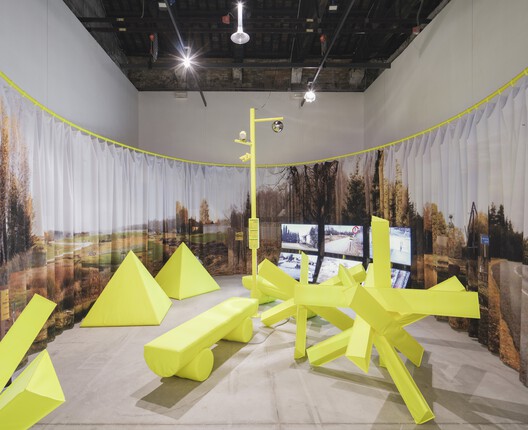
The Latvian Pavilion at the 19th International Architecture Exhibition – La Biennale di Venezia, commissioned by Jānis Dripe and curated by Liene Jākobsone and Ilka Ruby, explores the impact of military defense on the country's border landscape. The exhibition was designed by SAMPLING and Nomad Architects to highlight how geopolitical tensions shape both territory and daily life. In times of escalating international warfare, the curatorial team poses the question of what it means to live on NATO's external border in times of geopolitical conflict.


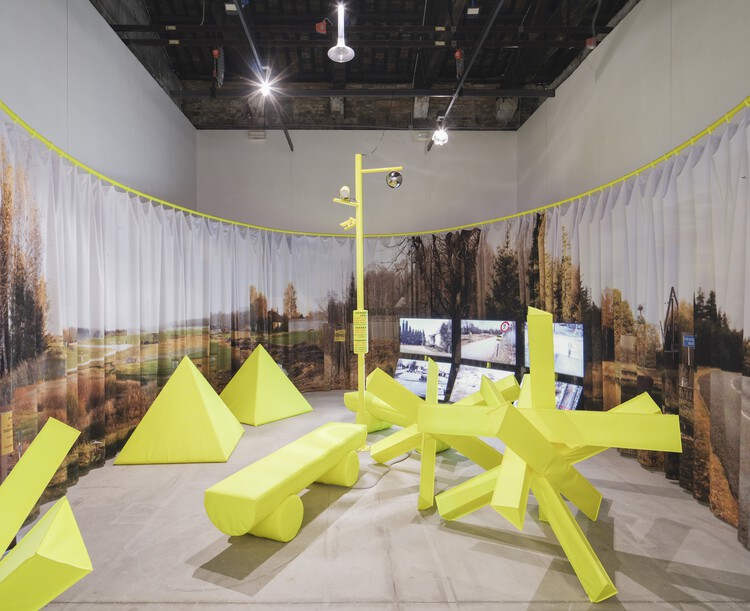
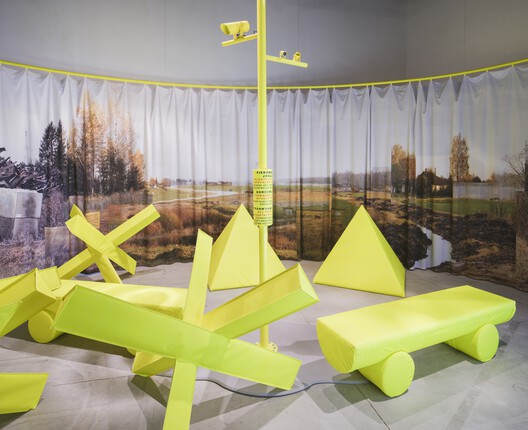
The exhibition focuses on the military defense of the Latvian state from the perspective of the inhabitants of the border area. The curators' objective is to highlight the specific conditions of Latvia's geographical situation, which they put forward as the reason behind the collective effects of a constant threat of attack. Focusing on the relationship between people and the defense landscape, the exhibition aims to offer the international architectural discourse a study of the relationship between military defense and spatial conditions through the Latvian example.
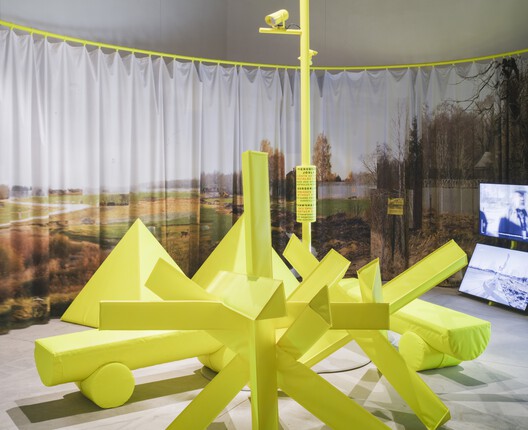
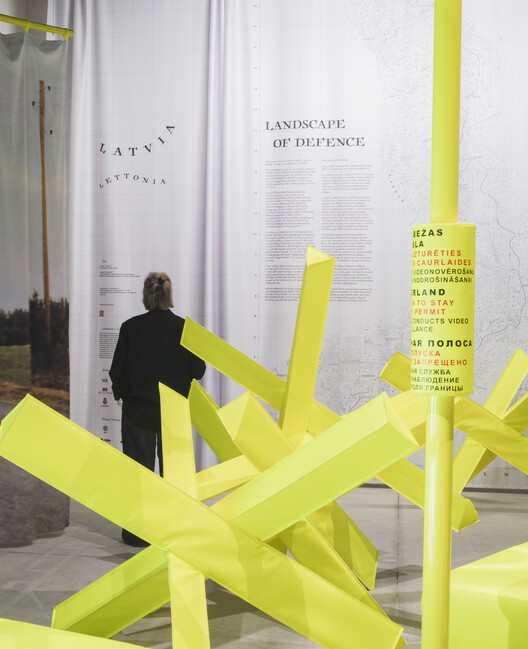
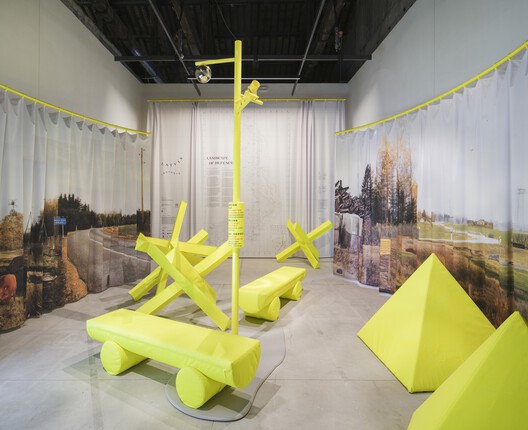
In the context of the reinforcement of the physical borders of the country and other regions of the world, the curators showcase various defense elements with their specific locations and functions as part of a coherent system along the border. These include fences, anti-tank "hedgehogs," concrete "dragon's teeth," and anti-tank trenches. The exhibition also cites military defense measures, initiatives of public information and training on crisis and war, as well as large-scale military mobilization.
Related Article
Heritage in Syria: Independent Groups Documenting the Country’s Historic ArchitectureThrough an exhibition design including anti-tank obstacles and neon-colored visual elements, the pavilion invites reflection on the physical and psychological imprint of border fortifications. The display seeks to spark a critical dialogue on security, resilience, and the spatial consequences of conflict. It is an invitation to architects, policymakers, and military defense specialists to take part in the conversation on spatial qualities, making a call to consider the physical footprint of defense strategies on a territory and the emotional impact on its population.
Curators Liene Jākobsone and Ilka Ruby bring extensive experience in architecture, design, and curatorial practice. Jākobsone, an architect and PhD researcher, is a founding partner of the Riga-based studio SAMPLING and serves as the director of the Institute of Contemporary Art, Design, and Architecture at the Art Academy of Latvia. Her work spans architecture, interior and exhibition design, and adaptive reuse, with a strong academic and research background across Europe. Ruby, based in Berlin, is a curator and author known for her involvement in international architectural discourse through her publishing work with Ruby Press and her curatorial projects, including contributions to the Venice Architecture Biennale, the Vitra Design Museum, and the Copenhagen Architecture Festival.
The Venice Biennale is in its final month before closing on November 23. This edition includes participation from 65 nations, four of them (Azerbaijan, Oman, Qatar, and Togo) joining for the first time. The Azerbaijan Pavilion at the 2025 Venice Architecture Biennale, titled Equilibrium. Patterns of Azerbaijan explores regeneration. Meanwhile, Togo's inaugural participation in the 2025 Venice Architecture Biennale presents "Considering Togo's Architectural Heritage," an exhibition curated by Studio NEiDA that explores the nation's architectural narratives from the early 20th century, focusing on themes of conservation and transformation.
Editor's Note: This article was originally published on April 10, 2025, and updated on October 30, 2025, to include new photographs of the space.
We invite you to check out ArchDaily's comprehensive coverage of the 2025 Venice Biennale.


